
- calendar_today August 7, 2025
BYD’s new charging technology innovation represents a fundamental change in the electric vehicle industry. BYD has surpassed Tesla in global EV sales and announced a new charging system that cuts refueling time to improve EV convenience to resemble that of gasoline cars. The “super e-platform” from BYD together with its 1,000 kW DC chargers establishes groundbreaking standards that could dramatically boost electric vehicle adoption.
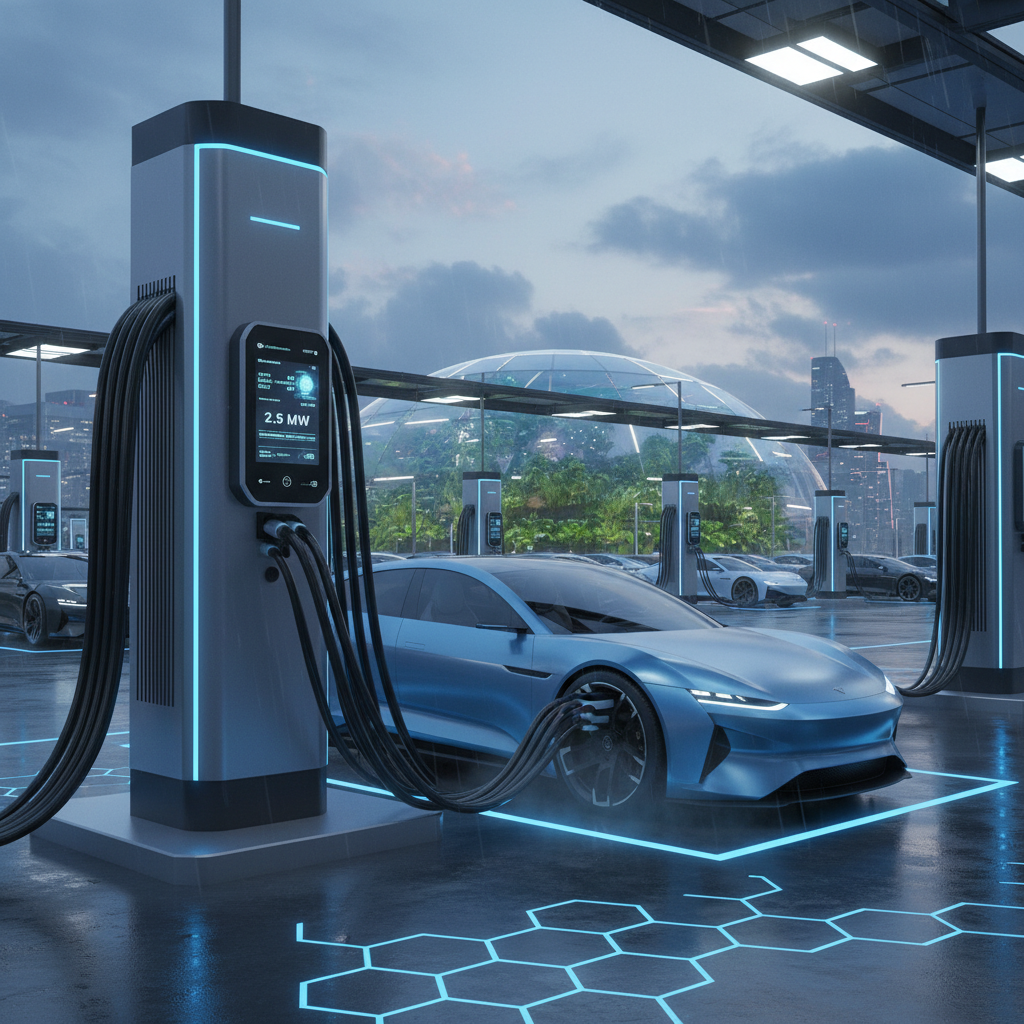
BYD has achieved its advancement by reaching a 10C charging capacity which exceeds standard industry rates. The combination of this technology with the 1,000 kW charging output enables users to add 249 miles (400 km) of range to their vehicles in five minutes. In comparison to Tesla’s Superchargers which reach 250 kW and Electrify America’s chargers which deliver 350 kW, Formula E’s high-performance chargers manage only 600 kW.
BYD chairperson Wang Chuanfu declared their mission to develop EV charging speeds that match those of gasoline refueling while addressing the primary obstacle to wider EV adoption which is extended charging duration. BYD’s new technology deployment brings their vision closer to reality.
BYD aims to construct more than 4,000 megawatt chargers that will support its recently introduced EV models Han L sedan and Tang L SUV which are engineered to take full advantage of this cutting-edge charging technology. The new infrastructure and technology will initially serve only the Chinese market.
Navigating Regional Differences and Market Access
BYD has expanded into global markets especially Europe but faces substantial limitations on market entry into the United States because of political obstacles. Bipartisan Congressional members have acted to stop Chinese EV manufacturers from penetrating the US market and have thus restricted American consumers from accessing this new charging technology.
A comprehensive understanding of range estimation standards discrepancies remains essential. The 249-mile range figure reported by BYD follows the CLTC standard which generally provides more generous results compared to the EPA standard utilized in the US. The real-world range that vehicles can achieve through EPA testing will probably show lower numbers.
BYD remains technologically advanced even though it faces regional market access challenges. Automakers with substantial operations in the United States could potentially license this technology. By licensing this technology US automakers could speed up the implementation of swift charging standards which would lessen political hurdles while expanding rapid charging benefits to more consumers.
The Potential for Global Impact and Licensing
BYD’s 5-minute charging technology has impacts that reach beyond China’s borders. The global adoption of electric vehicles could experience rapid growth if other automakers decide to license this new technology. Reducing charging time will solve a significant problem for consumers which will make electric vehicles more practical and attractive to a larger group of people.
The deployment of charging stations with over 4000 megawatts in China represents a major advancement in building EV charging networks. The Han L sedan and Tang L SUV models will be the first vehicles to benefit from this newly developed technology. This breakthrough charging technology will transform how consumers think about electric vehicles. This technology reduces the disparity between electric vehicles and traditional gasoline-powered cars.
BYD’s innovation marks a major advancement in electric vehicle technology which promises to revolutionize charging experiences and redefine the future of electric transportation. This technology stands to transform consumer expectations while speeding up the switch to electric vehicles through licensing or direct adoption.