
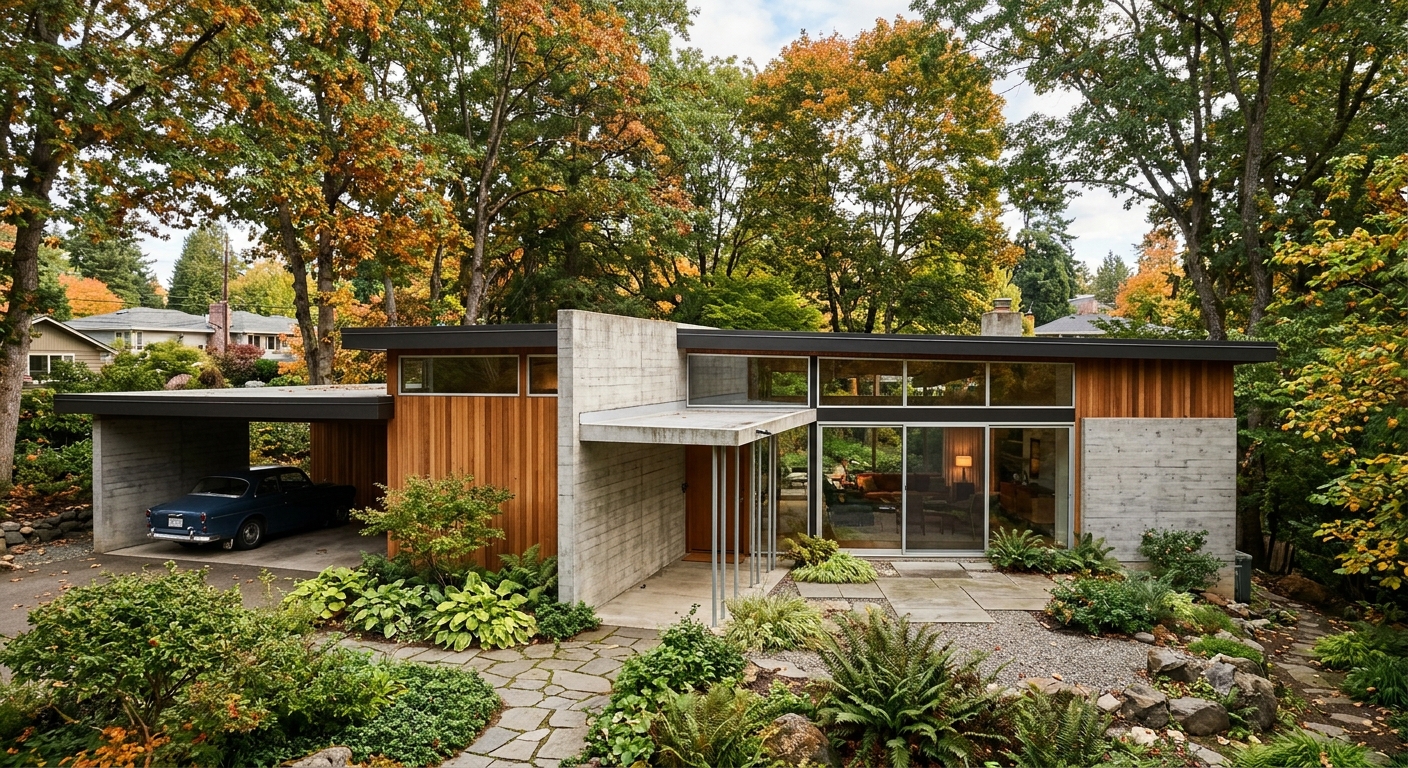
AI-generated illustration; not a photograph of the reported event.
- calendar_today October 22, 2026
Philadelphia’s Modernist Architecture Showcased in Interactive Map
The Philadelphia region boasts a rich array of modernist architecture, with hundreds of mid-century gems ranging from acclaimed homes to striking public buildings. Notable examples include Louis Kahn’s Margaret Esherick House and Frank Lloyd Wright’s Beth Shalom Synagogue—landmarks that illustrate the area’s architectural diversity after World War II.
Documenting Architectural Heritage with an Interactive Tool
Thomas Jefferson University’s Center for the Preservation of Modernism has launched an interactive map that catalogues the region’s modernist structures. The project, based out of Richard Neutra’s Hassrick House in East Falls, is a collaboration between university researchers, the Preservation Alliance for Greater Philadelphia, and Docomomo Greater Philadelphia—an organization committed to conserving modernist buildings.
The initiative grew from a previously compiled list by the Preservation Alliance, which expanded beyond initial expectations. The map features descriptions and a continually growing photographic catalogue of architectural landmarks, spanning residential, commercial, and industrial properties.
A Resource for the Public and Preservationists
The interactive map allows users to explore buildings by architect, neighborhood, or construction date. While many sites are concentrated in Center City and University City, significant examples also dot Northeast Philadelphia, Montgomery County, and even nearby South Jersey. Contributors are invited to expand the inventory, making the tool an evolving record of regional modernist heritage.
Suzanne Singletary, a Jefferson professor who led the map project, notes, "Philadelphia is not a slacker when it comes to great architecture, and we have some amazing, iconic buildings." The map aims to shift public perception beyond Philadelphia’s colonial or Victorian reputation to reveal its wealth of modernist landmarks.
Supporting Architectural Preservation Efforts
One of the map’s main goals is to aid preservationists, especially volunteers who write historical nominations. These advocates often work under tight deadlines to protect significant buildings threatened by redevelopment or decay. The consolidation of information helps streamline the nomination process, as Kevin King, a Jefferson graduate student and map co-creator, explains: "Having an inventory all in one place is certainly a way to coalesce the resources so that folks can quickly find what is or is not designated."
Recent examples, such as Tulipwood—a 1954 home designed by Elizabeth Fleisher, Philadelphia’s first licensed female architect—illustrate the challenges of preservation amid the pressures of development.
Modernist Homes Face Restoration Challenges
Mid-century modern homes, popular from the 1950s and '60s, now often require specialized restoration. Their distinct features—like flat roofs and expansive single-pane windows—are notoriously difficult to restore without altering their character, especially since original materials are sometimes scarce.
"There are ways of retrofitting windows and improving flat roofs that respect the original design," says King. Each building poses unique challenges for restoration experts and homeowners dedicated to preserving mid-century modern aesthetics.
A Niche Market with Dedicated Enthusiasts
Real estate agent Marion Dinofa, who serves on the board of Docomomo and specializes in mid-century modernist homes, has seen steady interest from buyers who value indoor-outdoor connections and natural materials. However, renovating these homes can be costly and may limit the pool of prospective owners.
Dinofa cites a King of Prussia residence designed by Neutra, which despite its pedigree and distinct features, was ultimately withdrawn from the market, demonstrating both the appeal and the challenges of modernist real estate. She hopes the map will inspire more participation in group tours and foster greater appreciation for Philadelphia’s modernist legacy.
Building Appreciation and Commitment to Preservation
The new interactive map provides greater visibility to modernist architecture in the Philadelphia region, highlighting both well-known masterpieces and lesser-known commercial buildings. Its creators and supporters believe this increased access will bolster preservation efforts and deepen the public’s appreciation for the city’s unique architectural heritage.
Source: phillyvoice.com.