
- calendar_today August 11, 2025
Green Energy Stocks: A Market in Transition
Leading clean-energy companies have experienced sharp sell-offs in the opening months of 2025. Tesla (TSLA) has fallen about 45% year-to-date after its weakest quarterly deliveries in two years, while First Solar (FSLR) is off nearly 32% despite reporting $4.2 billion in 2024 sales. Enphase Energy (ENPH) is down almost 29%, and NextEra Energy (NEE) has slipped close to 10%. Much of the downturn stems from broader market volatility, but also from investor concerns over cost structures in an increasingly competitive sector.
For Pennsylvanians, the slide has a local twist: retirement funds operated by large utilities and public-sector unions often hold these names, meaning residents may already have indirect exposure through their 401(k)s or pension plans.
Policy Support: The Inflation Reduction Act—and Pennsylvania’s AEPS
Nationally, the Inflation Reduction Act (IRA) continues to funnel billions into renewable projects via its 30% Investment Tax Credit (ITC) and $0.0275/kWh Production Tax Credit (PTC). Pennsylvania has been a sizable beneficiary: more than 50 federally backed projects now dot the state, representing over $3 billion in announced investments and $260 million in tax savings for 160,000 residents during the 2024 filing season. wesa.fm
At the state level, the Alternative Energy Portfolio Standards (AEPS) Act requires electricity suppliers to source at least 18 % of sales from alternative energy—0.5 % specifically from solar—each year after 2021. Utilities meet the mandate by buying Alternative Energy Credits (AECs), a mechanism that helps steady long-term demand for renewables generated inside the Commonwealth.
State Incentives: Pennsylvania’s Solar Renewable Energy Credits
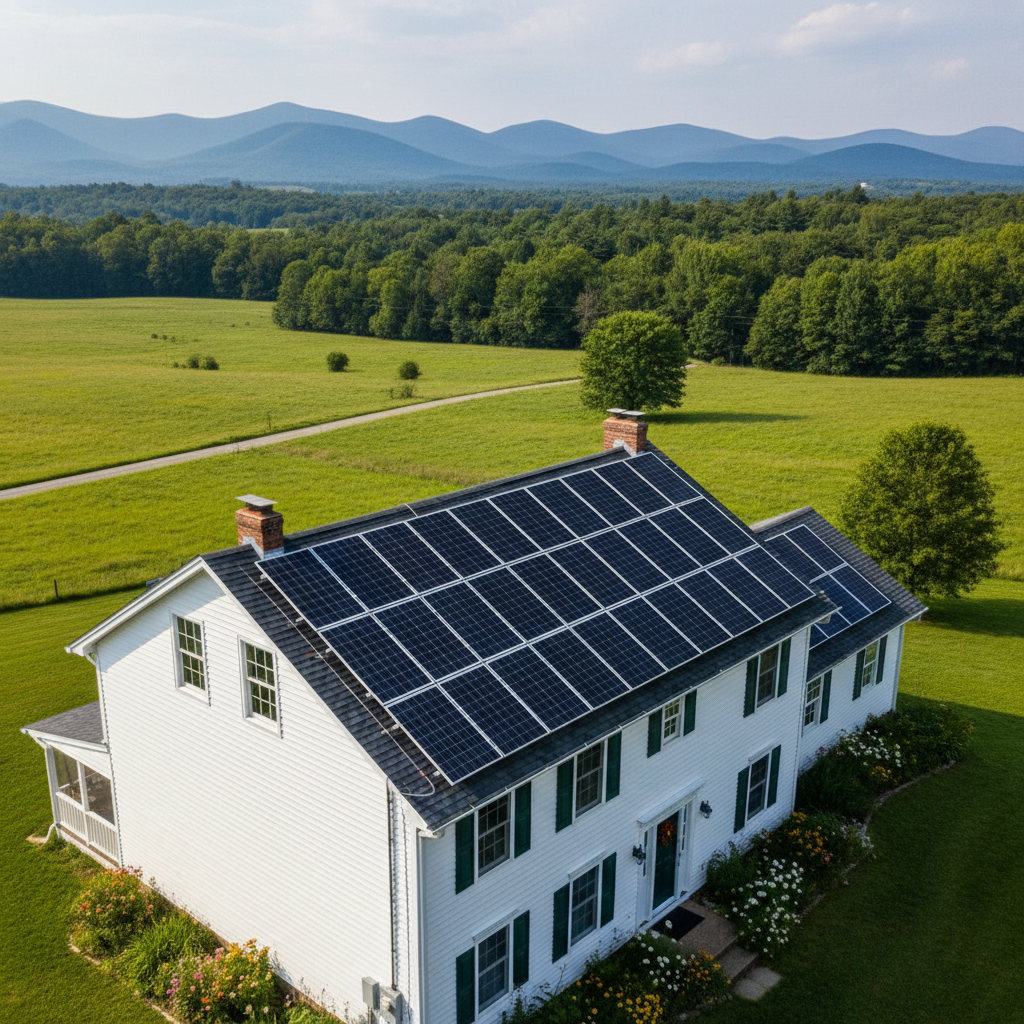
Beyond federal perks, local solar owners can sell Solar Renewable Energy Credits (SRECs), typically trading in the $40–$45 range per megawatt-hour so far in 2025. Although prices fluctuate with supply, SRECs provide an additional revenue stream for residents installing rooftop arrays or small community-solar systems, trimming payback periods to as little as six years in high-usage households.
Macroeconomic Conditions: Cooling Inflation, High Interest Rates
The Federal Reserve is holding its policy rate at 4.25 %–4.50 %, keeping borrowing costs elevated for capital-intensive renewable projects. Inflation, however, has cooled to 2.8 % as of March 2025, potentially paving the way for infrastructure spending once rate cuts materialize later in the year. For developers in Pennsylvania—many tapping the burgeoning warehouse-solar market around the I-76 corridor—lower inflation offsets some interest-rate pressure but does not eliminate it.
ETF Performance: Tracking the Broader Trend
Pennsylvania investors looking for diversified exposure often gravitate toward broad-based funds such as the iShares Global Clean Energy ETF (ICLN) and the First Trust Clean Edge Green Energy ETF (QCLN). ICLN is down roughly 5 % year-to-date; QCLN has fallen nearly 28%, mirroring its heavy weighting in Enphase and First Solar. Over five years, though, both still show double-digit total returns, underscoring the sector’s long-term promise.
What Analysts Are Saying
“The fundamentals of clean energy remain intact—especially with state programs like AEPS layering on top of federal incentives,” notes Samantha Klein, energy analyst at Morningstar. Yet Goldman Sachs has downgraded its green-energy outlook for Q2 2025, citing potential overcapacity and grid-upgrade costs. Meanwhile, the International Energy Agency projects renewables will provide 42 % of U.S. electricity by 2030, a target Pennsylvania’s policymakers support through bipartisan bills to expand community solar and green hydrogen hubs.
So, Should You Invest Now?
Whether April 2025 represents a buying window depends on risk tolerance and time horizon.
- Long-term investors (5–10 years): The current pullback offers a chance to accumulate high-quality names or ETFs at discounted valuations. Federal and state incentives, plus Pennsylvania’s growing clean-energy job base—nearly 5,000 roles announced since 2022—support the thesis.
- Short-term traders: Elevated interest rates, political uncertainty over IRA rollbacks, and technical selling pressure mean volatility may persist.
- Diversifiers: Instead of a single stock, regionally balanced ETFs such as ICLN or QCLN can spread exposure across solar, wind, EV, and battery segments.
In 2025, green energy is more than a climate imperative; it is an evolving market shaped by policy, politics, and macroeconomics. For Pennsylvanians, state-specific incentives like AEPS credits and SRECs fortify the long-term outlook—even as short-term headwinds make patience essential.
Bottom line: Ask yourself what kind of investor you are and how long you’re willing to wait. The answer will determine whether today’s turbulence is a buying opportunity or a cue to stay on the sidelines.