
- calendar_today August 13, 2025
As Pennsylvania’s broader economy stabilizes in 2025, commercial real estate (CRE) across the state is still struggling to regain its footing. From persistently high office vacancies in downtown Pittsburgh and Philadelphia to declining warehouse absorption rates and investor hesitation, CRE’s recovery in the Keystone State is proving slower and more fragmented than expected.
While analysts had forecast a rebound by 2024, the combination of structural changes, financial uncertainty, and region-specific challenges continues to weigh on the sector. Here are seven major factors contributing to the sluggish CRE rebound in Pennsylvania this year—and what they signal for property owners, developers, and local governments.
1. Office Vacancies Remain Elevated in Urban Hubs
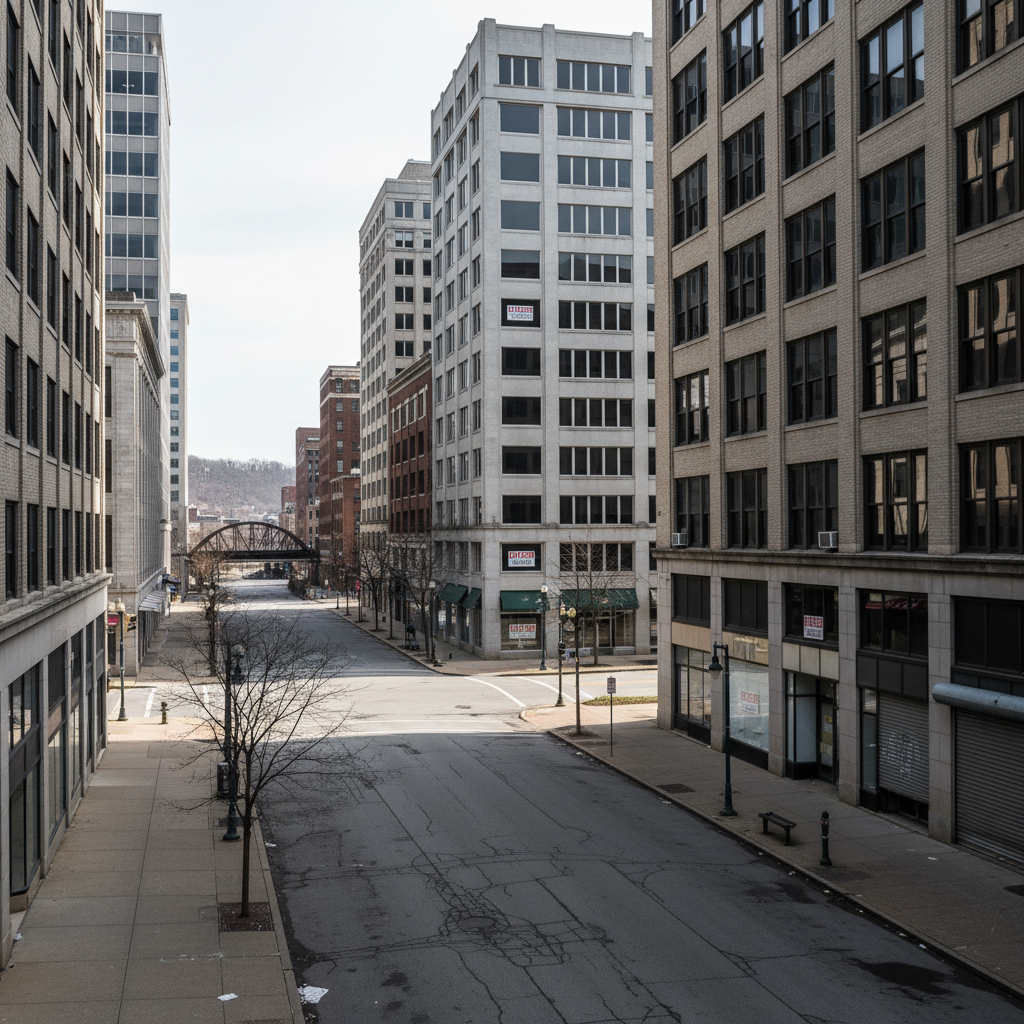
The shift to hybrid and remote work continues to reshape Pennsylvania’s office sector. In Q2 2025, CBRE reports that vacancy rates in downtown Philadelphia reached 20.8%, while Pittsburgh’s Golden Triangle exceeded 22%. Both cities are seeing long-term leases expire with fewer renewals, as tenants opt for smaller spaces or delay commitments.
Suburban office parks in areas like King of Prussia and Cranberry Township have shown slightly more resilience, especially among medical and tech tenants. But on the whole, demand remains weak. Landlords across the state are offering tenant improvement packages and shorter lease terms to attract occupants.
“The traditional office model has been permanently altered—especially in mid-sized metro markets,” said Julie Whelan, Head of Occupier Research at CBRE.
2. Retail Real Estate Adjusts to Lasting Consumer Behavior Shifts
Pennsylvania’s retail corridors—especially in secondary cities like Allentown, Erie, and Scranton—are still dealing with the aftershocks of the e-commerce boom and shifting consumer habits. While open-air centers near major interstates are seeing moderate gains, traditional malls in places like Harrisburg and Monroeville are underperforming.
According to Placer.ai, statewide mall visits were down 21% from pre-pandemic levels in Q2 2025. Retail chains such as Rite Aid and Sears have closed additional locations across the state, reducing foot traffic in regional centers.
Adaptive reuse projects are emerging in former mall locations, converting empty anchor stores into healthcare facilities or charter schools, but progress remains slow due to zoning and financing hurdles.
3. Industrial Real Estate Sees Growth Plateau
Pennsylvania’s industrial boom—which thrived during the pandemic thanks to its central location and access to major distribution corridors—is now cooling. Logistics hubs in the Lehigh Valley, central Pennsylvania, and along I-81 have seen rising vacancy rates and softening demand.
Cushman & Wakefield’s latest figures show industrial vacancy statewide rose to 6.1% in Q2 2025. New supply from previous construction pipelines is entering the market just as e-commerce demand flattens and transportation costs rise.
Markets such as York and Mechanicsburg, once hotbeds for warehouse development, are seeing landlords extend concessions or reevaluate rental expectations.
4. Multifamily Development Slows Amid Rising Costs
Multifamily housing remains in high demand in Pennsylvania’s growing metro areas, but developers are hitting pause due to rising interest rates, material costs, and labor shortages. Building permits for multifamily units statewide declined by 11.9% year-over-year in May 2025, according to the U.S. Census Bureau.
Rent growth is also slowing. Zillow’s June 2025 data indicates rent increases of just 1.5% across the state—down sharply from 4.9% in 2023. Cities like Philadelphia and State College are holding relatively steady due to student and young professional demand, while other areas like Altoona and Reading are seeing softer leasing activity.
Many developers are considering build-to-rent models or seeking public-private partnerships to make projects pencil out amid tighter margins.
5. CRE Investment Activity Hits Multi-Year Lows
CRE transaction volume across Pennsylvania has dropped significantly in 2025. MSCI Real Assets reports that statewide CRE investment in H1 totaled just under $5.7 billion, a 26% decline from the same period in 2024.
Higher interest rates, risk-averse regional banks, and uncertainty around asset values are all factors contributing to the investment slowdown. Local lenders with significant exposure to office properties in Philadelphia and Pittsburgh are tightening lending criteria, further limiting deal flow.
Foreign investment, while historically low compared to coastal states, has nearly dried up amid broader caution in global capital markets.
“Buyers and sellers are simply too far apart on price expectations right now,” said Jim Costello, Chief Economist at MSCI.
6. Policy Changes and Tax Concerns Complicate Outlook
Policy developments across Pennsylvania are also contributing to CRE hesitancy. Proposals in Philadelphia to expand the city’s commercial property reassessment system have raised alarms for landlords, who worry about higher tax burdens.
In Pittsburgh, initiatives aimed at converting underused office buildings into affordable housing are gaining traction, but implementation timelines remain unclear. Zoning and permitting remain significant hurdles for adaptive reuse projects statewide.
Meanwhile, Pennsylvania lawmakers continue to debate changes to tax incentives for historic redevelopment and opportunity zones, leaving investors uncertain about long-term returns.
7. Confidence Remains Fragile Across Asset Classes
Investor sentiment across Pennsylvania’s commercial real estate markets is still marked by caution. Office and retail sectors remain under a cloud of uncertainty, while even the once-resilient industrial and multifamily sectors are being approached with more scrutiny.
According to Nareit, REITs with regional exposure to Pennsylvania’s core cities are underperforming their national counterparts. Institutions and pension funds are reevaluating their allocations, leaning more heavily into alternative assets or safer, more liquid investment options.
At industry events like the Pennsylvania Commercial Real Estate Summit and Urban Land Institute’s 2025 regional meeting, the emphasis remains on ESG, adaptive reuse, and data-driven portfolio decisions—but the pace of implementation is uneven across the state.
What to Watch in the Second Half of 2025
Although recovery has been slower than expected, several developments could stabilize Pennsylvania’s CRE sector in the coming months:
- The Federal Reserve’s pause in rate hikes could ease financing constraints for new projects.
- Zoning and adaptive reuse policies in cities like Philadelphia and Lancaster may unlock stalled redevelopment.
- Distressed asset transactions may reset property values and renew investment interest, particularly in suburban submarkets.
However, experts agree that recovery will remain uneven across asset types and geographies. Office and mall properties face longer-term headwinds, while industrial and multifamily may recover more quickly in logistics-adjacent and high-demand housing areas.
Final Takeaway
Pennsylvania’s commercial real estate market is facing a slower-than-anticipated rebound in 2025. Structural workplace changes, consumer behavior shifts, and financial headwinds are redefining the state’s CRE landscape. For investors, developers, and policymakers, success will depend on adaptability, patience, and a hyper-local approach to navigating the evolving real estate cycle.