- calendar_today August 24, 2025
The Sandman’s Last Chapter Delivers Beauty, Tragedy, and Closure
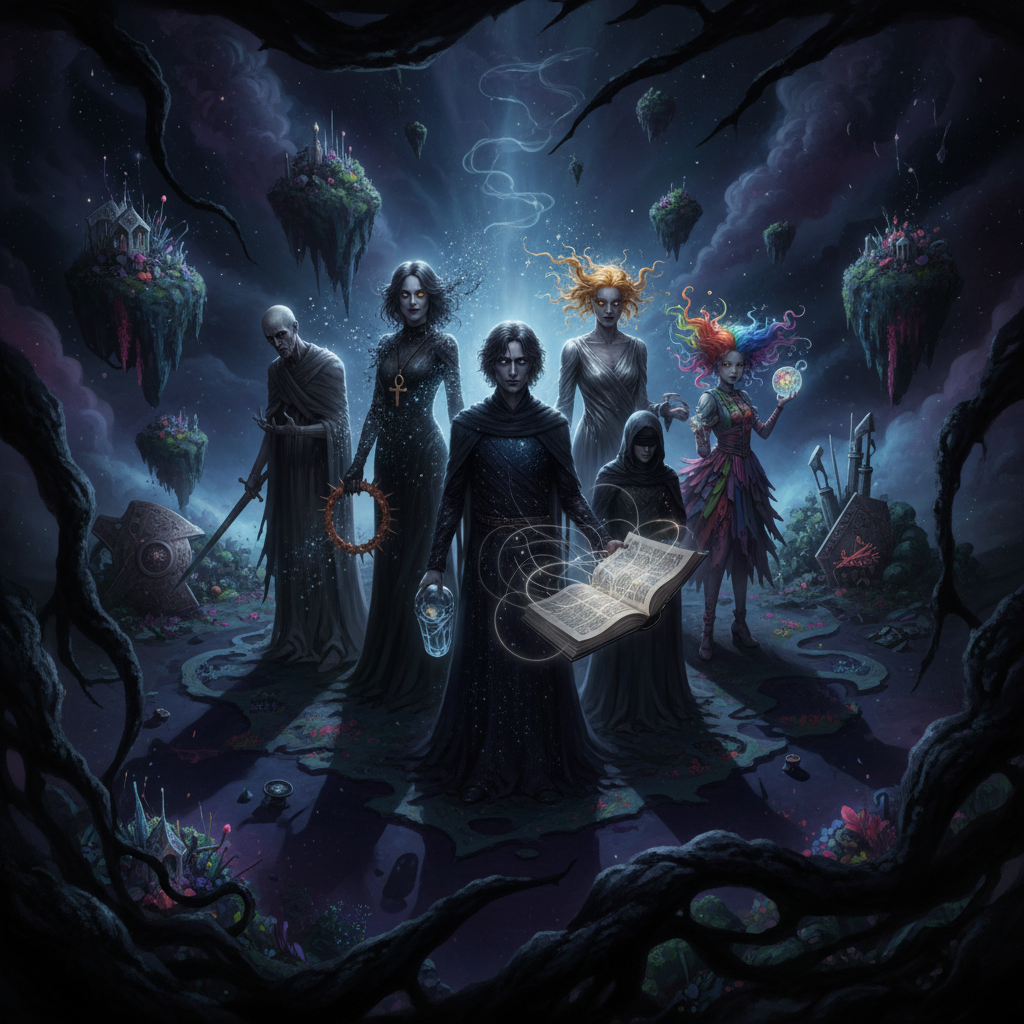
Last year, The Sandman, the Netflix series based on Neil Gaiman’s beloved comic-book series of the same name, arrived for its first season. Showrunner Allan Heinberg’s adaptation of the first volume of the series, Preludes and Nocturnes, captured its source material’s impressionistic dream logic and dark, ethereal tone perfectly, blending an anthology vibe from the comics with a more grounded through-line for Morpheus and the other members of the Endless: his sister Death (Kirby Howell-Baptiste), and their siblings Destiny (Adrian Lester), Desire (Mason Alexander Park), Despair (Donna Preston), Delirium (Esmé Creed-Miles), and Destruction (Barry Sloane).
In January, Netflix announced that The Sandman would not return for a third season, to which many fans of the first season deduced that the decision might have something to do with the sexual misconduct allegations against Gaiman (since denied by the author), but showrunner Allan Heinberg took to X to set the record straight: Season 2 was always the plan. “There was always the plan to do two seasons. We believed strongly that we had enough story to fill two seasons,” Heinberg wrote, “And I’m so happy it’s played out that way because we just ran out of story to tell at the right time.” It’s hard to disagree; the second season is hitting its final steps just as the first one did.
Where Season 1 was based on Preludes and Nocturnes and The Doll’s House with two bonus episodes, the second and final season adapts Seasons of Mists, Brief Lives, The Kindly Ones, and The Wake with a healthy sampling from Fables and Reflections, including “The Song of Orpheus” and a few other bits from “Thermidor,” as well as the Hugo Award-winning “A Midsummer Night’s Dream” from Dream Country. The second bonus episode in this season is the second comic’s adaptation, the 1993 one-shot spinoff Death: The High Cost of Living. A Game of You and several short stories are conspicuous by their absence, but the missing elements don’t seem to carry over to the Sand King’s overall arc.
Season 1 ended with Morpheus’ resounding victory: he was freed from his captivity, recovered his lost talismans, dealt with the escaped Corinthian (Boyd Holbrook), and turned away the Vortex from the Dreaming. Season 2 begins with Morpheus rebuilding his kingdom and working with William Blake (Jermaine Clement) to rebuild his reality after the Vortex’s near-obliteration, only to be interrupted by an extremely rare visit from his sibling Destiny (Adrian Lester). Death, Desire, Despair, and Delirium are all summoned to a family meeting with some extreme tensions.
Destiny’s intent in gathering the Endless for a meeting is to ask Dream to save Nada (Umulisa Gahiga), his former lover, queen of the First People, whom he sentenced to Hell for breaking his edict. This forces Dream to once again enter into conflict with Lucifer (Gwendolyn Christie), who was released from Hell during Season 1 and has never forgiven Morpheus for it. However, Lucifer, it turns out, is sick of being in charge, and instead of fighting her former adversary, hands the key to an empty Hell over to him so that he can find a new ruler, with candidates including Odin, Order, Chaos, and the old demon Azazel.
Dream’s sister, Delirium, expresses a longing to find her missing brother, Destruction, who abandoned his realm centuries ago and never returned. Destruction’s legacy leads Dream on the path to his inevitable conclusion of spilling family blood and earning the ire of the Kindly Ones.
Highlights, Lowlights, and a Proper Goodbye
Production values and character casting remain excellent, and the show’s visual aesthetic continues to channel the image of the graphic novel expertly. Some viewers found the first season slow, and the second suffers from the same criticism, but pacing, as always, is a deliberate choice by the creators.
The weakest stretch of the season is “Time and Night,” in which Morpheus turns to his birth parents, Time (Rufus Sewell) and Night (Tanya Moodie), for assistance. Morpheus appealing to his creator is canonically sound—the Endless are their children, after all—but the material, and even Sewell, can’t overcome the inherent awkwardness of these scenes, which play more like a late-night therapy session than conversations of immortal deities.
The real highlights of the season run the gamut: Lucifer asking Dream to cut off her wings for her; the ancient goddess Ishtar (Amber Rose Revah) casting aside all dignity to dance with the gods for the very last time in her godly form; Dream having to explain to William Shakespeare why he must write The Tempest; the reformed Corinthian falling in love with Johanna Constantine (Jenna Coleman); Orpheus’ lament to the Underworld for his wife’s life; Dream killing his son with the gift of mercy; Fiddler’s Green (Stephen Fry), Mervyn Pumpkinhead (Mark Hamill), and Abel (Asim Chaudhry) being annihilated by the Furies in the Dreaming; and, of course, Morpheus’ demise in the land of his own making.
Dream takes Death’s hand for the last time and surrenders, ready to pass the torch on to the new iteration: Daniel Hall (Jacob Anderson), the one human ever to be dreamt into existence in the Dreaming. Daniel Hall is disoriented and alone in the strange new reality, but it’s clear from the first that he’s not just the replacement—he’s something new entirely. As the Endless bid farewell to Morpheus and greet the latest version of Dream into their number, the series closes on a note of melancholy, hope, and whimsy befitting the story of a god.