
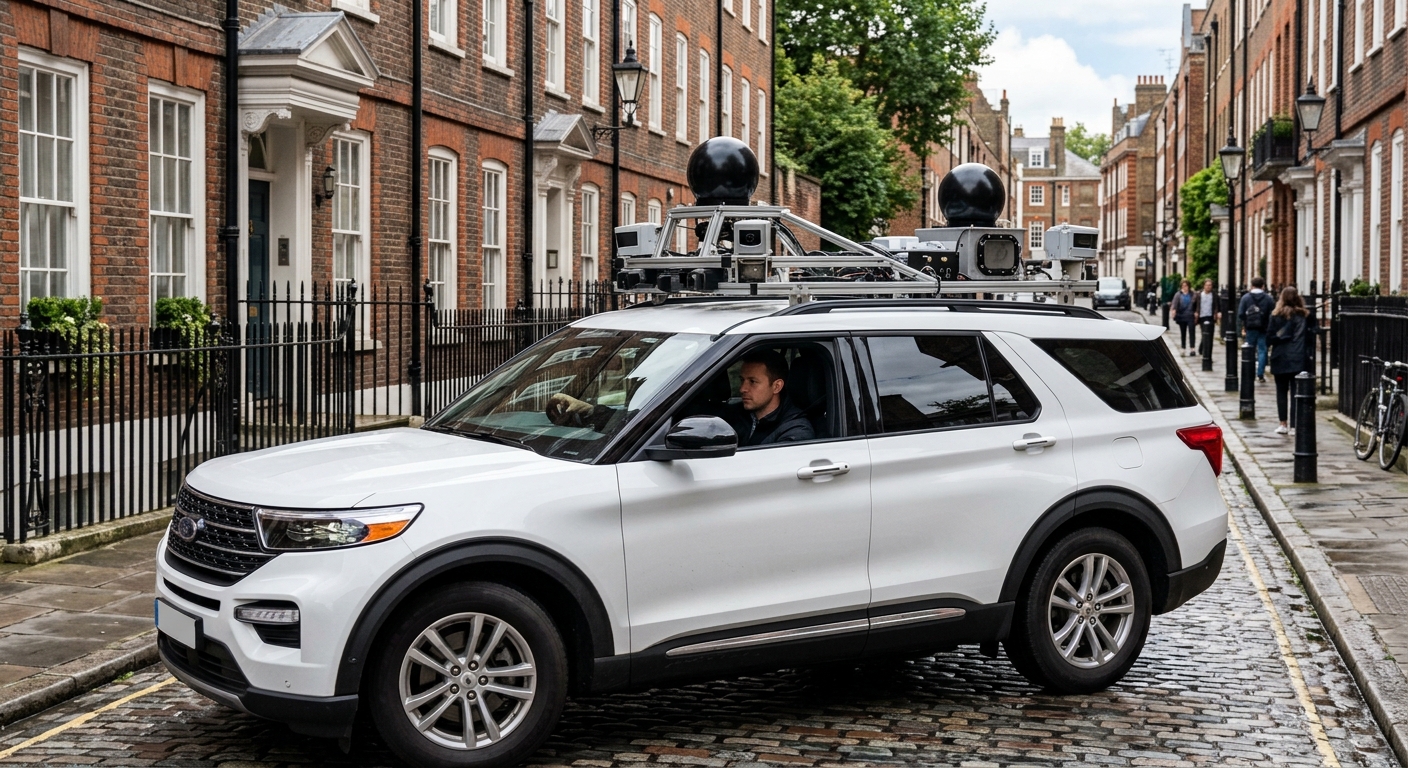
AI-generated illustration; not a photograph of the reported event.
- calendar_today October 9, 2026
Waymo’s Ongoing Testing of Autonomous Vehicles in Philadelphia
Waymo’s autonomous vehicles have become a familiar sight on Philadelphia’s streets since the company began testing and mapping the city’s roads in July 2025. Typically, these test vehicles are either Jaguar I-PACE SUVs, seen in white or teal, or white Chrysler Pacifica hybrids. While Waymo is actively collecting data and assessing the city’s driving conditions, it has yet to launch a commercial service or test vehicles without a safety driver present.
Public Observations and Regulatory Response
In September, a Fairmount resident spotted what appeared to be a Waymo vehicle operating without a driver at the intersection of 26th Street and Pennsylvania Avenue. The observer captured a photo, prompting questions about whether Waymo had begun fully autonomous testing in the city. However, Waymo spokesperson Ethan Teicher clarified that “No Waymo vehicles are operating without a trained specialist behind the wheel in Philadelphia.” The company’s internal review confirmed that, during the specified time period, all vehicles in the area were being operated with a driver on board, either in manual or autonomous mode.
Despite this assurance, the Pennsylvania Department of Transportation (PennDOT) took the report seriously, directing Waymo to conduct an internal investigation. According to PennDOT spokesperson Zachary Appleby, any operation outside the terms of certification—such as fully driverless testing—could result in suspension or revocation of Waymo’s permit.
Regulation, Oversight, and City Council Perspectives
Currently, PennDOT holds sole authority over autonomous vehicle operations in the state, leaving some Philadelphia City Council members frustrated over the city’s lack of influence. Councilmember Jim Harrity expressed concern that “the state never wants to give up any authority,” and highlighted residents’ apprehension regarding the technology. Harrity led a City Council hearing in May to discuss Waymo’s expansion, at which experts raised issues including cybersecurity vulnerabilities and potential impacts on local gig workers. However, Waymo did not participate in person, submitting written testimony with limited details instead.
Council members also consulted the city’s Office of Transportation and Infrastructure Systems (OTIS) about coordination with PennDOT. The city’s efforts have so far focused on training first responders to interact with autonomous vehicles. Harrity emphasized the need for more transparency and legal recourse, stating the city was “blindsided” by the technology’s introduction.
Timeline for Driverless Taxis and Commercial Launch Remains Unclear
Despite ongoing testing, Waymo has not specified when it will begin deploying driverless taxis in Philadelphia. According to Teicher, “[t]he vehicles are not yet configured for fully autonomous driving in Philadelphia.” The next step would require certification from PennDOT to allow testing with Waymo staff in the back seat and no human in the driver’s seat. Pennsylvania law mandates that cities receive at least ten days’ advance notice before this stage of testing begins.
Waymo’s driverless service is currently available in several U.S. cities—including Phoenix, San Francisco, Los Angeles, Atlanta, and Dallas—but a commercial launch in the Northeast remains pending. Testing continues under driver supervision in Philadelphia, Pittsburgh, Baltimore, and the Boston area. New York City’s transportation authorities chose not to renew Waymo’s permits earlier this year, partly due to opposition from the city’s taxi lobby and concerns over how autonomous vehicles would navigate dense urban environments.
Safety Concerns and Public Reporting
Safety and public trust remain central issues for city officials and residents. National studies, such as those by the Insurance Institute for Highway Safety, indicate that autonomous vehicles have the potential to reduce crashes caused by human error, yet research remains limited and lacks standardization. Meanwhile, increased deployment in cities like Los Angeles has correlated with rising numbers of reported incidents involving autonomous vehicles.
PennDOT encourages residents to submit photo or video evidence if they observe vehicles operating without a driver. To date, PennDOT has not received additional reports beyond the Fairmount incident. When Waymo seeks to launch commercially in Pennsylvania, it will require further approval from the Pennsylvania Public Utility Commission to operate as a Transportation Network Company—joining the ranks of Uber and Lyft.
Broader Impacts: Gig Workers and Urban Testing
Concerns extend beyond safety to economic impacts, particularly around gig workers dependent on rideshare and delivery services. Councilmember Harrity voiced worries about how automation could affect job opportunities, particularly in lower-income communities reliant on flexible gig work. An analysis cited by City Council suggests that, while Waymo and Tesla rides remain slightly more expensive than human-driven alternatives, that price gap is narrowing.
As Waymo continues urban testing in Philadelphia, debates over regulation, public safety, and economic impact are likely to persist. The company has yet to reveal how many vehicles are currently operating in the city or which cities might see a commercial rollout next. For now, residents and city officials are awaiting more information and greater involvement as autonomous vehicle technology—and local oversight—evolve.
Source: phillyvoice.com.