- calendar_today August 22, 2025
Although Windows Copilot, which is scheduled to launch this fall, is the center of attention, Microsoft is also working on another AI story that is much closer to home.
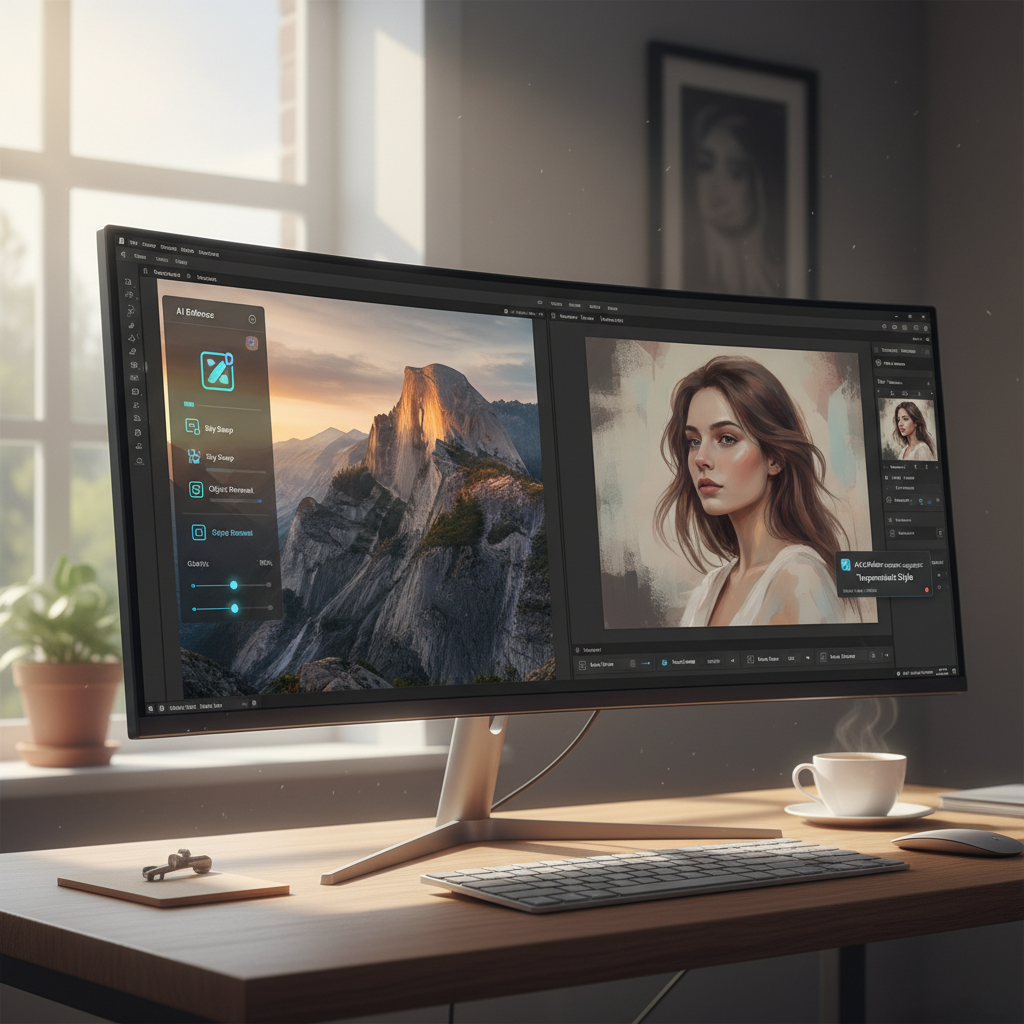
A recent report from Windows Central claims that Microsoft is getting ready to introduce AI-powered features in a number of well-known Windows 11 apps. We’re not referring to bots or gaudy new platforms. Rather, we’re examining how the core apps—Photos, Snipping Tool, Camera, and Paint—are gradually becoming more intelligent.
Let’s examine what lies ahead.
First up is optical character recognition (OCR), a straightforward yet potent game-changer.
It may soon be possible to use the Snipping Tool, Photos, or even the Camera app to copy and paste text straight from any image. Take a screenshot of a section of an article on the internet? Take a picture of the classroom whiteboard? That text will be immediately available for you to extract and paste wherever you need it.
Copy-typing and third-party tools are no longer required.
Users of Apple’s neural engine have been utilizing comparable features for some time, so this is nothing new in the industry. However, is Microsoft integrating it into Windows natively? For the PC ecosystem, that is significant.
Better Images, Quicker Edits
These improvements will also help the Photos app. Microsoft is investigating artificial intelligence (AI) that can recognize faces, people, animals, and objects so that you can interact with them more naturally.
Do you want to remove someone from a group photo? Completed. Do you want to make a sticker of your cat by removing the background? Only a few clicks.
In the past, sophisticated editing software was needed for these tasks. However, they may soon be accessible using the tools that are already installed on your computer.
For those without access to high-end design apps, it is not only practical but also empowering.
MS Paint Enters the Age of AI
Let’s now discuss MS Paint, a real underdog story.
Paint, which has long been thought of as a simple drawing tool, may soon undergo a significant update. According to reports, Microsoft is testing Paint’s text-to-image capability. Paint would create the image for you if you typed something like “a panda eating ice cream on a mountain.”
Yes, one of Windows’ most cherished apps will soon have generative AI.
This concept expands upon Microsoft’s Bing Image Creator, which makes use of OpenAI’s DALL·E model. It’s surprising and ingenious that Paint incorporates that technology. It transforms a basic tool into an unexpectedly imaginative playground.
NPUs’ Function: Local AI, Improved Privacy
Naturally, a strong foundation is necessary for all of this AI magic. Neural Processing Units (NPUs) can help with that.
Compared to conventional CPUs or GPUs, these chips are specifically made to perform machine learning tasks more effectively. NPUs are already present in Qualcomm’s Snapdragon chips, but conventional PC processors from AMD and Intel are only now catching up.
Widespread support for AI features will be made possible by the NPUs found in AMD’s Ryzen 7040 series and Intel’s upcoming Meteor Lake chips.
Why is this important?
Your device can manage AI tasks locally if it has an NPU. This implies:
- Quicker reaction times
- Reduced dependence on the cloud
- More robust privacy safeguards
- Increased battery life for users of mobile devices
To put it briefly, your computer gets smarter without exposing your data.
AI That’s not shouty; it’s subtle.
Microsoft’s subtle strategy is particularly intriguing.
Instead of emphasizing artificial intelligence through talking bots or coerced interactions, the company is integrating AI into everyday tasks like text copying, photo editing, and painting. It is AI that simply functions without creating any noise.
No “Hey, I’m artificial intelligence!” moment occurs. Only natural-feeling, useful features.
And that’s arguably the most interesting aspect of all.