
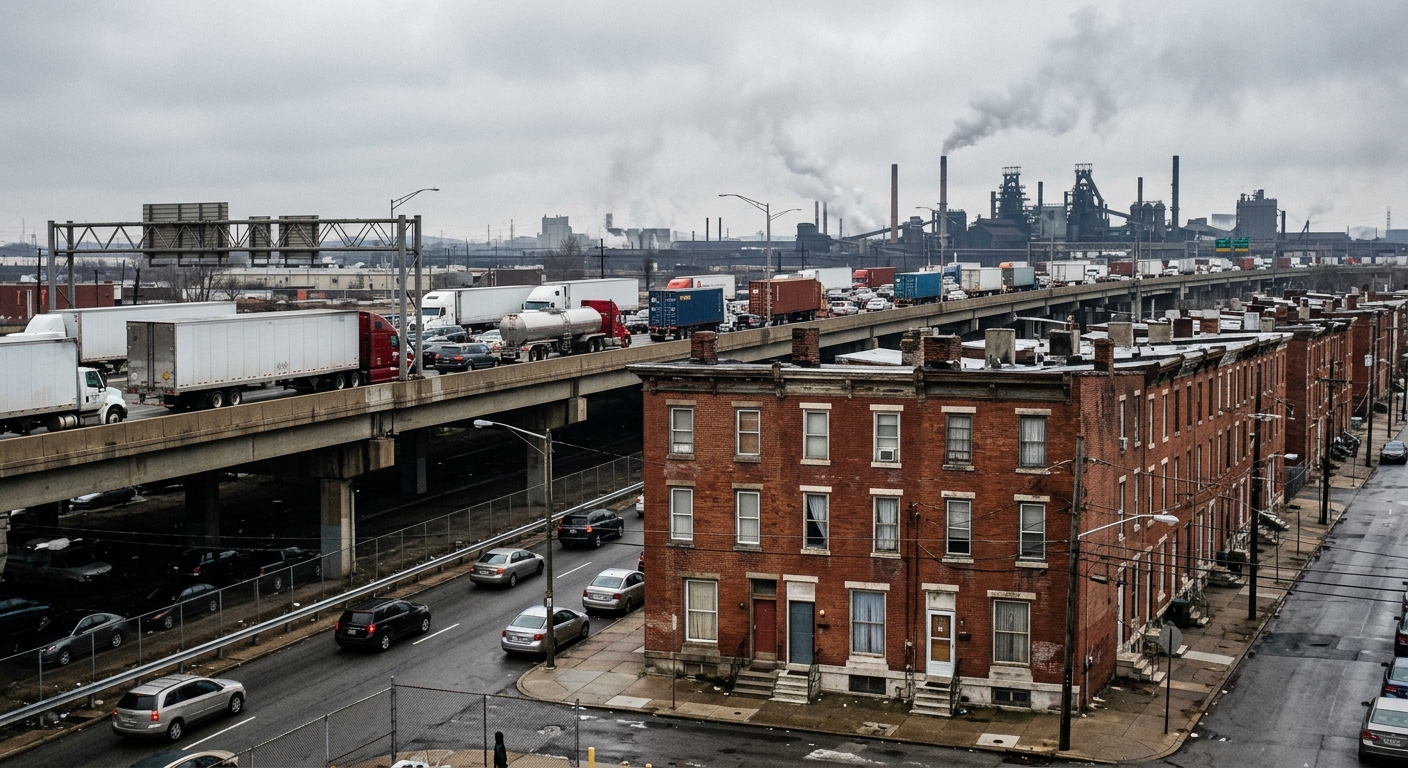
AI-generated illustration; not a photograph of the reported event.
- calendar_today August 5, 2026
PENNSYLVANIA — Philadelphia air quality continues to raise concerns as a new Rowan University study reveals a strong connection between poor air conditions and heightened asthma rates in the city’s most impacted neighborhoods. The research, focused squarely on Pennsylvania’s largest urban center, underscores the consequences of environmental exposure and historic inequities for community health.
Disproportionate Impact in Industrial Areas
The study, which analyzed data from 766 census tracts in the greater Philadelphia region, found that proximity to industrial areas and major highways significantly increased residents’ risk for respiratory health conditions. Neighborhoods such as Franklinville, Stanton, Bartram Village, and Strawberry Mansion emerged as asthma hotspots, often situated alongside heavy traffic corridors and concentrated pollution sources.
Air Pollution and Racial Disparities
Rowan University’s findings highlight that predominantly Black communities, especially those shaped by historical practices such as redlining neighborhoods, are burdened with the city’s highest asthma rates. The research ties racial disparities directly to patterns of land use and environmental exposure, with residents in these areas encountering more diesel particulate matter than other populations in Pennsylvania.
Role of Diesel Particulate Matter
Exposure to emissions from highways and commercial vehicles—specifically diesel particulate matter—was identified as a key pollutant driving up respiratory illness. Philadelphia’s complex traffic network continually exposes nearby communities to air pollution, intensifying asthma rates and straining local health systems.
Calls for Urban Planning Reform
The research team urges leaders to incorporate urban planning solutions alongside health-focused approaches. They recommend robust health impact assessments be embedded in future zoning reforms, ensuring public health and environmental exposure are central to land use decisions in Pennsylvania. Such measures aim to safeguard vulnerable communities from preventable hazards and promote longer-term improvement in community well-being.
Historical and Present-Day Challenges
While the study acknowledges improvements in Philadelphia’s air quality since the 1980s, it warns that contemporary threats—like acute pollution events from wildfires and the potential for new AI data centers—risk undermining progress. These trends, combined with the lingering effects of redlining neighborhoods and inequitable zoning, place Pennsylvania cities at a critical juncture for environmental and public health action.
The Path Forward for Pennsylvania
According to Rowan University, integrating health impact assessments into citywide planning can help counteract the legacy of poor air pollution policy and reduce asthma rates among at-risk populations. As Pennsylvania’s urban centers grapple with modern development, the study emphasizes the importance of prioritizing respiratory health, sustainable infrastructure, and equity for all residents.