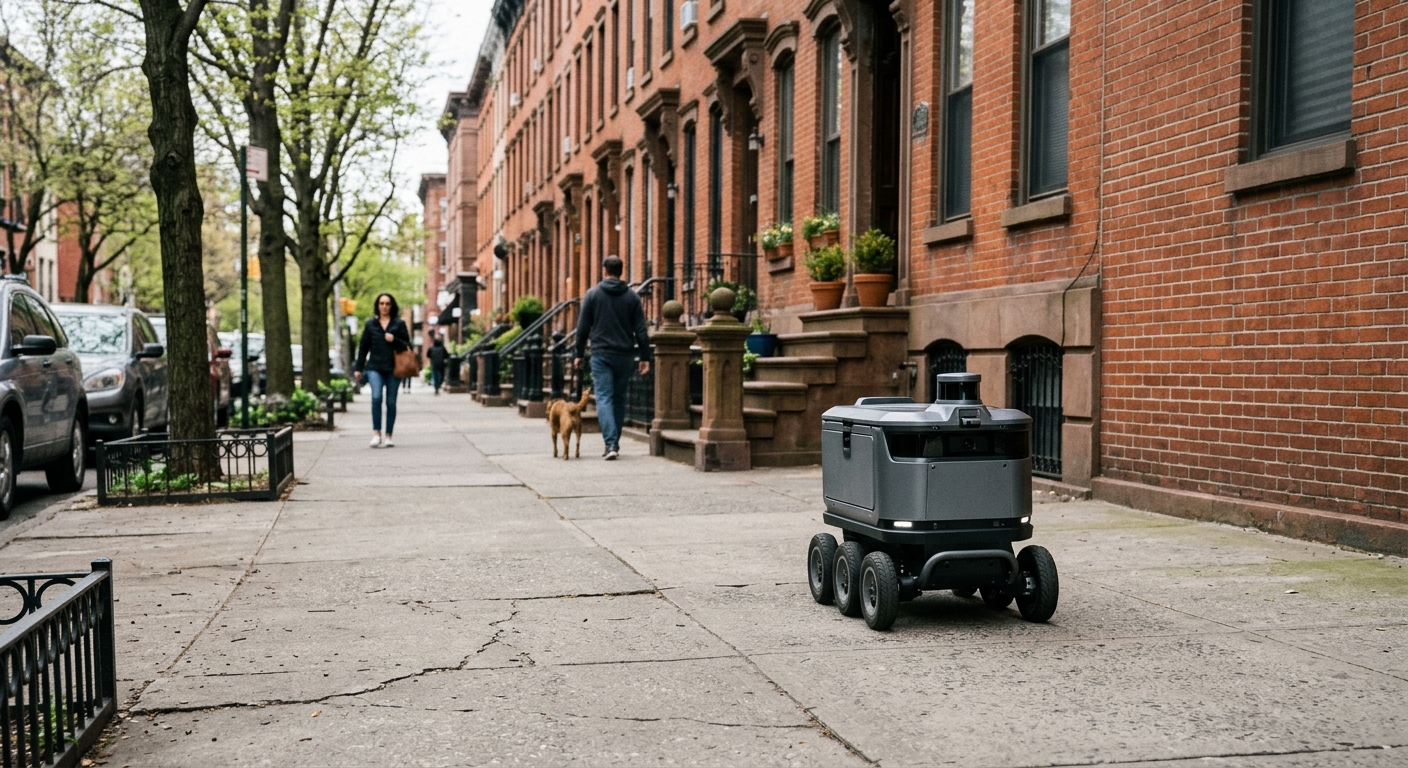
AI-generated illustration; not a photograph of the reported event.
- calendar_today October 30, 2026
Philadelphia Proposes 'Robot Tax' Targeting Automated Delivery and Driverless Services
Philadelphia's City Council is debating a new bill that would impose a tax on companies operating delivery robots and driverless vehicles. Introduced on Thursday by Councilmember Jim Harrity (D-At-Large), the legislation would primarily affect businesses offering automated services using robots rather than human workers — including sidewalk food delivery robots and autonomous vehicles like Waymo’s driverless taxis.
Details of the Proposed philly robot tax
The proposal outlines a tax structure for various forms of automated services. Delivery robots, such as those used by Uber Eats, would be subject to either a 5% tax on the gross cost or a $0.50 fee per transaction, whichever is higher. For robotic transportation services, such as robotaxis, companies would be taxed at 5% or $1 per service. Autonomous vehicles carrying freight would see a different tax, calculated as 3% based on the number of miles traveled within Philadelphia. These tax rates may be revised as the city council bill proceeds through committee discussions.
Objective: Offsetting Lost Revenue and Protecting Jobs
Councilmember Harrity emphasized that the goal of the job protection tax is to compensate for revenue losses related to the city’s wage tax and business income tax, which are impacted by the adoption of automated services. The tax is designed only to apply to devices performing tasks in place of a human worker. "This isn't about tax, this is about keeping jobs that my neighbors are doing right now," Harrity said during the Thursday council meeting.
Companies Impacted: Uber Eats Robots and Waymo Driverless Taxis
The philly robot tax would directly affect companies such as Avride, which deployed its Uber Eats delivery robots in Philadelphia in March. Avride recently expanded its partnership with Grubhub and has begun delivering orders from Wonder food hall as well.
Waymo, meanwhile, has been conducting autonomous vehicle tests in Philadelphia since July 2025. However, its driverless taxi services are not yet operating in the city, as they have not received the necessary permits. Earlier in May, Harrity hosted a City Council hearing on the safety and labor implications of autonomous vehicles. Waymo declined to participate in person and instead provided written testimony, and no date has been announced for when its service might launch in Philadelphia.
Funding the Zero Fare Program through the autonomous vehicle tax
If enacted, the revenue from the proposed taxes on automated delivery services and robotic transportation would fund the city's Zero Fare Program. This initiative provides free SEPTA rides to low-income residents. Although established during former Mayor Jim Kenney's administration, the program currently lacks permanent financial support. Last week, Councilmember Nicolas O'Rourke proposed allocating 0.5% of Philadelphia's general fund to support Zero Fare and other transit affordability measures.
Future Steps and Legislative Considerations
The city council bill addressing delivery robots, waymo driverless taxis, and freight automation tax is subject to further review and possible amendment as it moves through committee. As Philadelphia adapts to the rise of automated delivery and transport technology, officials continue to weigh the potential economic impacts and community benefits.
Related coverage
Source: phillyvoice.com.